|
|
|
Tick bites are usually painless, the ticks are tiny, and
consequently many people are unaware that they have been bitten. Ticks
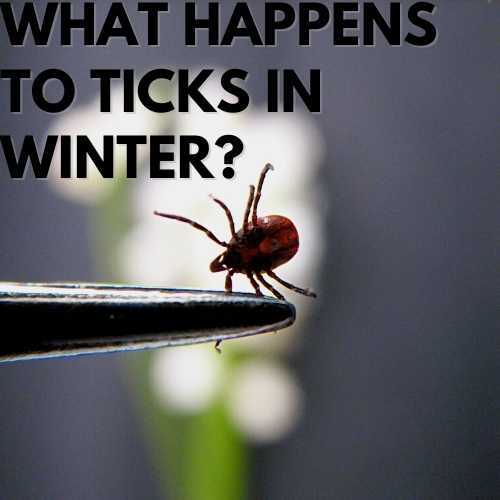
do not survive in hot, dry areas as it causes their bodies to dry.
They can be active when temperatures are above 40F even in the
winter.
GOOD SENSE TIPS
Wear light colored clothing, long sleeves and pants, tuck pants
into socks. Long loose hair should be covered, braided or tied
when venturing into areas where ticks are apt to be. Spray your
clothing, etc. (also, see Repellent Sprays section).
When coming in from outside activities where you might have
encountered ticks, throw clothing into the dryer set on high heat.
This will ensure no ticks survive on your clothing. Remember to do
a tick check, take a shower and
wash your hair.
Keep pets that have outside exposure off furniture especially
bedding.
Make certain that you have very fine pointed tweezers available.
Also, see the section on property protection and repellent sprays.
TICK CHECKS
Thorough tick checks should be done, daily or when coming in after
outside activities when temperatures are warm and you have been in
areas that you may have encountered ticks (ticks can be active
even on warm winter days). Check dark, moist areas: hair, cracks
behind ears, knees, elbows, underarms, crotch etc. (also see: Tick
Removal section).
Check your pets for ticks when they come into the house (also, see
Protecting Animals section).
Wear light colored clothing, long sleeves and pants, tuck pants
into socks. Long loose hair should be covered, braided or tied
when venturing into areas where ticks are apt to be. Spray your
clothing, etc. (also, see Repellent Sprays section).
TICK REMOVAL
Ticks should be removed promptly. The
longer it is attached the higher the chance of disease
transmission. Remove it carefully to prevent disease transmission:
-
Using fine pointed tweezers, grasp the tick as close to the skin as
possible without squeezing the tick's body.
-
Firmly pull it straight out (expect to feel
some resistance). Save the tick for future testing by placing it
in a plastic bag or in a small jar of alcohol. If a tick is to
tested for spirochetes place it in a small jar or vial with a
blade of grass to keep it alive. Be sure to note the date and
site of the bite for future reference.
-
NEVER: squeeze the tick, burn it, or
cover it with Vaseline or any other substance.
-
Remember to disinfect the site of the bite,
wash your hands and disinfect your tweezers.
-
Contact your doctor.
|
|
DEET products can be used for exposed skin.
Several controlled release DEET formulations have been developed
which decrease skin absorbtion and increase protection time.
Extended duration products include 3M Ultrathon, Skedaddle, and
Sawyer's Controlled Release. Concentrations of DEET effective for
mosquitoes, especially for children may not be effective against
ticks, so tick checks are vital (see Repellent Sprays section).
US EPA information on DEET can be located at: http://www.epa.gov/pesticides/citizens/deet.htm
Permethrin 0.5% based sprays (on clothing only, not on skin,
always follow manufacturers directions) for clothing, especially:
shoes, socks, pants cuffs or on other fabrics such as mosquito
netting, tents. It is a synthetic pyrethroid insecticide
rather than a true repellant, and works primarily by killing ticks
on contact with treated clothes. It lasts up to 2 weeks and
provides high levels of protection against ticks and mosquitos.
These products (Duranon Tick Repellent, Repell Permanone, Cutter
Outdoorsman Gear Guard, Permethrin Tick Repellent) usually
can be found at sporting goods or garden supply stores. Once dry,
Permethrin has a low level of mammalian toxicity, is poorly
absorbed through the skin and is rapidly inactivated by the body.
Comment: to prevent exposure, do not spray permethrin on clothing
on a windy day. Hint: if you regularly do yardwork, you might
consider using a set of clothing that you have sprayed with
permethrin.
Natural or Herbal Repellents and other products are marketed for
protection against mosquitos, but are probably less effective
against ticks. Applications of plant-derived repellents that might
reduce tick attachment are less likely to deter a tick from
walking across the skin to an untreated area.
If venturing into tick habitat, a combination of both DEET for
skin and permethrin on clothing might be considered. Always follow
guidelines for using repellant sprays
before applying.
Consumers Report, June 2000, "Buzz-off!" contains
worthwhile information on insect repellants.
|
|
Ticks are most common in overgrown places where
the ground is covered with leaf litter, weeds, and high grass,
etc. These are the areas where they are protected from harsh
drying effects of sun and wind, and are also where mice and deer
live. Ticks can be found in the ecotone that surrounds your lawn
area from the woods. Sometimes they can be found on well mowed
lawns or in your home, because they dropped off animals or pets
that crossed over or entered these areas.
The following methods are suggested to minimize
ticks on your property.
-
Create tick free zones around your home by
cutting back wooded areas and increasing the size of open
lawn.
-
Keep grass mowed to 3 inches or less. This
lowers humidity at ground level, making it difficult for ticks
to survive.
-
Place play areas in sunshine.
-
Remove leaf litter, moist plant litter, brush,
weeds and other debris that attract ticks.
-
Eliminate dense plant beds close to your home
such as ivy and pachysandra.
-
Create borders (pebbles, cedar chips) to
separate your lawn from the wooded area surrounding it.
-
Rock walls, woodpiles, and birdfeeders attract
mice and chipmunks which hide, nest and eat spilled food from
these sources. Do your best to keep these far from your home.
-
Keep garbage in tightly closed cans and don't
leave pet food outside or purposely attract and feed wild
animals.
-
Reduce plants that attract deer and plant
those that they do not eat.
-
Scare tactics can be used to keep deer away.
-
Soap such as Irish Spring can be used to keep
deer from eating plants.
-
Ten foot high deer fences can be used to keep
them out of property.
-
See Tick control section for information about
arcaricides and insecticides.
-
See Research section for the multiple other
exciting methods under development.
Other
Prevention Topics:
The Connecticut Agricultural Experiment
Station, which is involved in tick research has a
wonderful resource
site prepared by Kirby C. Stafford III, PhD. Dr. Stafford
has also published the Tick
Management Handbook.
Please note: The Tick Management Handbook is
quite large and may take considerable time to load into your
browser.
|
|
There
are many methodologies to control ticks. Most of these are covered
under the topics of Property Management or under Research.
Host
reduction and exclusion: We have built homes in wooded areas,
farmlands have decreased; the result of this is an increase
in deer and mouse populations and an increase of human contact
with ticks.
The
deer are responsible for increasing the tick population. The
mouse, followed by the chipmunk are responsible for the spread of
many tick-borne pathogens, as they are the reservoirs for the
disease organisms (as an example for the Lyme disease spirochete).
Therefore, reducing exposure to these animals and reducing ticks
on them seem a reasonable approach and are incorporated into much
of the research and recommendations in the other sections.
Insecticidal
soaps and Diatomaceous earth (silicon dioxide) due to its desiccation
(drying) properties work against ticks.
Arcaricides
are another approach that is quite controversial, use only those
that are labeled for the control of ticks in residential
landscape. They can be quite effective against nymphal ticks if
application is done at the optimum date of mid-May to early June
in the Northeast. A fall application may be used to control the
adult I.scapularis. Comment: most people acquire Lyme disease from
the nymphal ticks, due to their small size. Always read and follow
EPA approved label on the product containers.
Cyfluthrin
(Tempo). Chemical class: pyrethroid. For licensed applicator use
only, is one of the most commonly used commercial products for
tick control.
A
website prepared by Kirby C. Stafford III, Ph.D., at the CT
Agricultural Experiment Station contains more information about
these products. It can be found online at: http://www.caes.state.ct.us/FactSheetFiles/ForestryHorticulture/Tick%20Control01.pdf
|
|
The Lyme
disease vaccine, Lymerix was withdrawn from the market on Feb. 27,
2002.
Many serious diseases are carried by the blacklegged tick, such as
Lyme, babesiosis, ehrlichosis, etc., thus one bite can transmit
multiple organisms simutaneously. Therefore, it makes better sense
to utilize funding to support tick control research and
intervention methods rather than a vaccine that will only protect against Lyme disease?
The University of Connecticut in collaboration with the National Institutes of Health & the Centers for Disease Control
are researching molecules and/or proteins in the tick saliva and
salivary glands to develop a vaccine that would block the ticks'
ability to feed and transmit pathogens. This would cause the tick
to "drop off of the animal" thus has the potiental to
prevent not only Lyme disease but other tick-borne disorders.
Those of us from S.T.O.P. would hope that would be developed into
an oral vaccine for animals such as the mice and deer. In that way
the ticks would not be able to complete their life cycle, causing
mortality and drastic reduction of their populations, thus
protecting humans and pets. An environmental solution for an
environmental problem!
|
|
PETS
Check with your veterinarian for tick control
products and/or a Lyme disease vaccine that they consider safe for
your animal. Remember that exposing your pet to more than one type
of treatment (collars, dips, baths or powders) within a short
period of time might seriously harm your pet. For pets that go
outdoors, check them carefully when they return inside.
Designate specific sleeping areas for your pets and check their
bedding routinely for ticks (if they get on your furniture check
it also). It is wise to vacuum their bedding, carpeting, and
furniture they frequent, then dispose of the vacuum bag contents
in outdoor trash can.
DEER
For information about "4 poster" feeder
stations which reduce ticks on deer, see Research section.
MICE & CHIPMUNKS
Keep small animals, such as mice outside of your
home by sealing small gaps. For information about bait boxes
that reduce ticks on mice and chipmunks, see Research section.
You may also use Damminix,
tubes stuffed with cotton balls treated with the pesticide
permethrin. Mice make nesting materials from the cotton, thus reducing the
ticks on the mice.
|
|